Cookies and the protection of your data

We use cookies to improve the functionality of the website, to offer you a better website experience and to provide social media features. You give your consent by clicking on “Accept all Cookies” or as part of your individual settings. Please find detailed information on the use of cookies on this website in our Data Privacy Statement.

Functional Cookies

These cookies are necessary for the operation of the site and enable security-relevant functions. In addition, we determine whether you want to remain logged in and to make our services available to you when you change between this and other websites.

Statistical Cookies

These cookies are used for analyzing user behavior on our website with the aim of improving user navigation. All data collected is evaluated anonymously. Further information is available on our data protection site.

Marketing Cookies

These cookies are used to deliver relevant advertising or to limit how many times you see an ad. Marketing cookies can share that information with the advertiser (third-party cookies). The legal basis for the data processing is the consent of the user.

Living Trails
Living Trails
Living Trails
Living Trails
2026

Share:

Living Trails

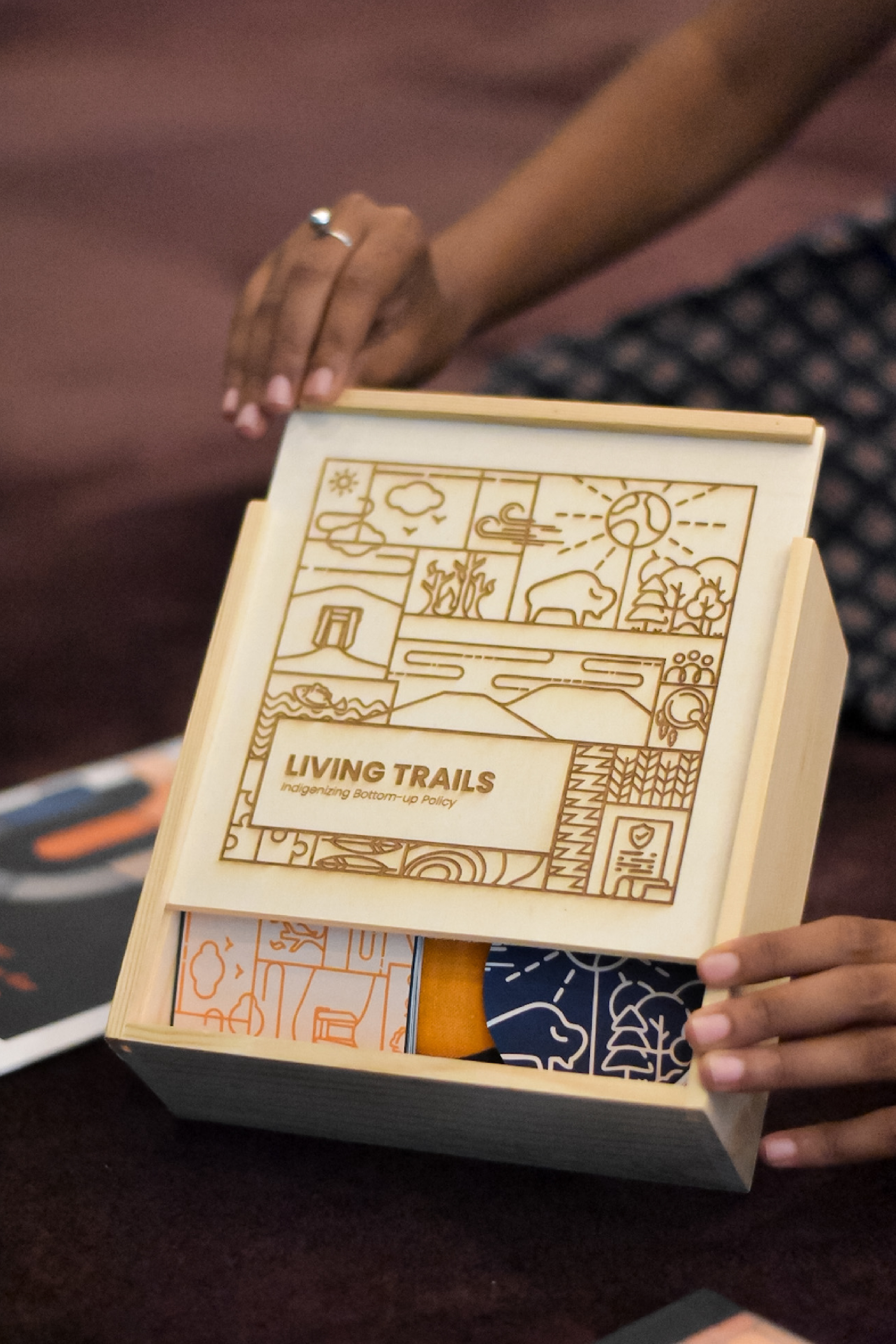
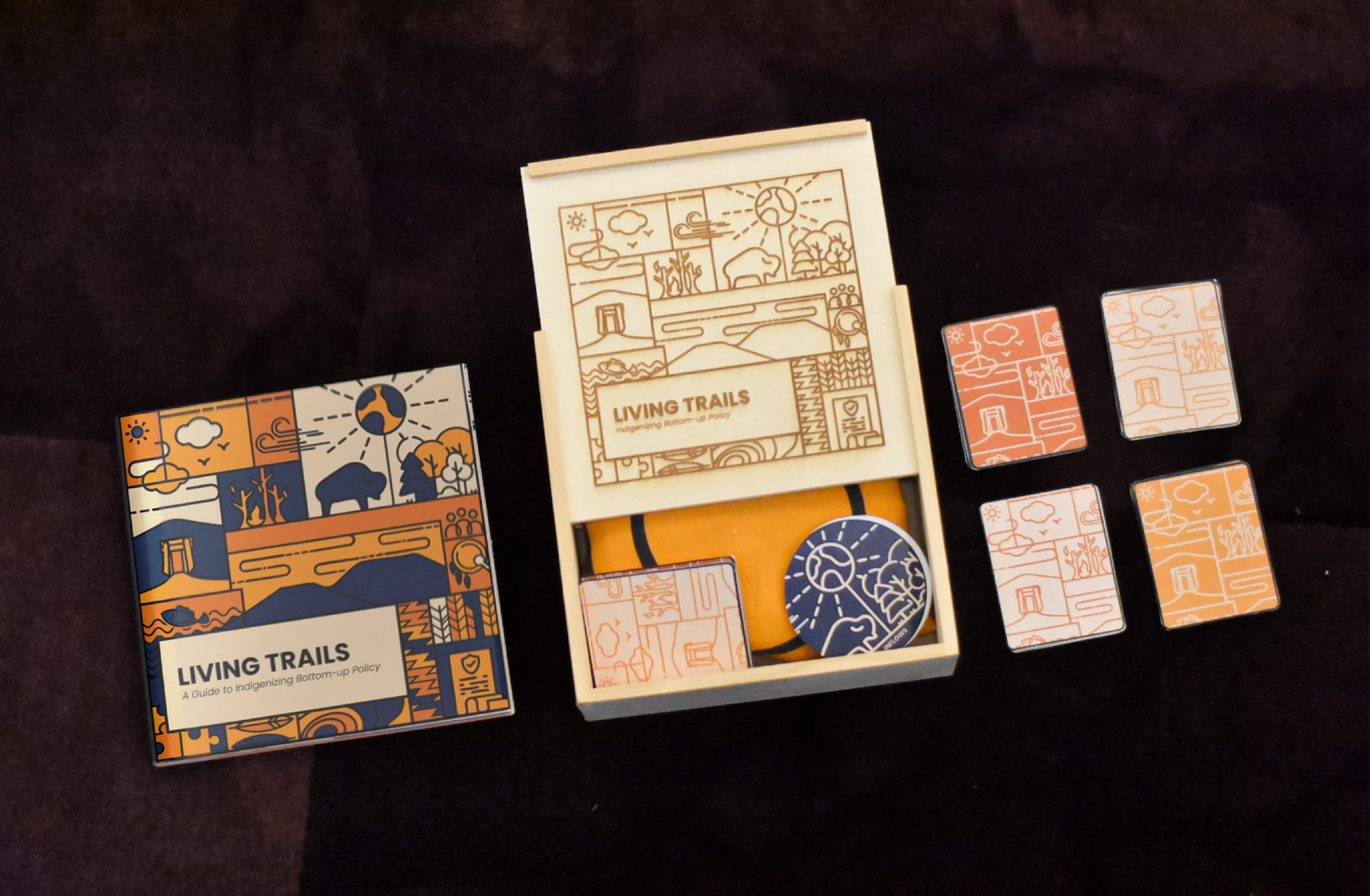
Participatory Toolkit for Bottom-up Policy Making

Conventional policy processes often marginalize grassroots voices and rely on linear models that conflict with relational worldviews. Living Trails is a participatory framework that empowers Indigenous and marginalized communities to co-create policy with institutions. It uses a facilitation toolkit and alignment models to build trust, redistribute decision-making power, and ground policy in place-based knowledge. The goal is to meet human needs while respecting planetary boundaries and social foundations.

JURY STATEMENT

This concept represents a mature framework for Participatory Policy Design. By synthesizing complex administrative processes into an accessible, low-cost toolkit. It empowers marginalized indigenous groups to engage in civic discourse. This demonstrates that design can serve as a catalyst for systematic social change.

WINNER STATEMENT

Receiving this recognition for Living Trails is both an honor and a reminder that in a rapidly changing world shaped by inequality and fragmentation, we must pause, reflect and move forward together; creating futures where no community, knowledge system, or voice is left behind.

UNIVERSITY

Savannah College of Art and Design

Savannah, US

DESIGN

Abhishek Khan

Savannah College of Art and Design

RELATED PROJECTS